

Travel content has changed dramatically over the past decade. Airlines, hotels, rail providers, and other suppliers now distribute inventory through a growing mix of channels, giving travelers more choices than ever while creating new challenges for managed travel programs.
As distribution continues to evolve, companies need a way to provide travelers with access to the choices they expect, while maintaining the data visibility and service consistency required to support a successful travel program.
Creating that balance starts with understanding how travel content has changed and what a modern approach must deliver.
Why Content Has Become More Complicated
Historically, most business travel bookings followed a linear path. Suppliers distributed their inventory primarily through Global Distribution Systems (GDSs), giving both managers and travelers a centralized way to search and book travel.
While the GDS remains an important source of travel content, organizations now also access inventory through New Distribution Capability (NDC) connections, consumer sites, supplier-direct offers, low-cost carriers, rail providers, and other emerging content sources. This shift has expanded the range of content options available to business travelers, but it has also made travel distribution significantly more complex.
When content is fragmented across multiple channels, organizations risk facing:
- Inconsistent booking and servicing experiences
- Reporting gaps
- Reduced policy compliance
- Missed opportunities to help travelers find the best available option
While expanding access to travel content is an important first step, simply connecting to more sources doesn’t automatically create a better travel program.
Building Upon Content Access
Many organizations can connect to multiple content sources, but far fewer can consistently service those bookings and capture the data they generate. As you evaluate your travel program, consider questions like:
- Does your platform provide a unified, normalized, and near-real-time view of your travel data?
- Can your travelers rely on 24/7 support? Do they have access to expert servicing teams regardless of booking source?
Separate service workflows, inconsistent booking experiences, and disconnected data can quickly outweigh the benefits of expanded content access. The goal is to make content visible, bookable, and serviceable across the entire travel program.
Connected Content in Action
Travelers shouldn’t have to think about where a fare or hotel rate originates. They should simply be able to find the right option for their trip, and managers should be able to maintain visibility behind the scenes.
That’s the approach behind Avenir. Designed with an NDC-first architecture, it connects content, servicing, and trip data within a shared booking record, allowing travelers and advisors to work from the same trip regardless of where the booking originated. When these elements exist within the same ecosystem, travel managers gain a more complete view of their program while travelers benefit from a more consistent experience.
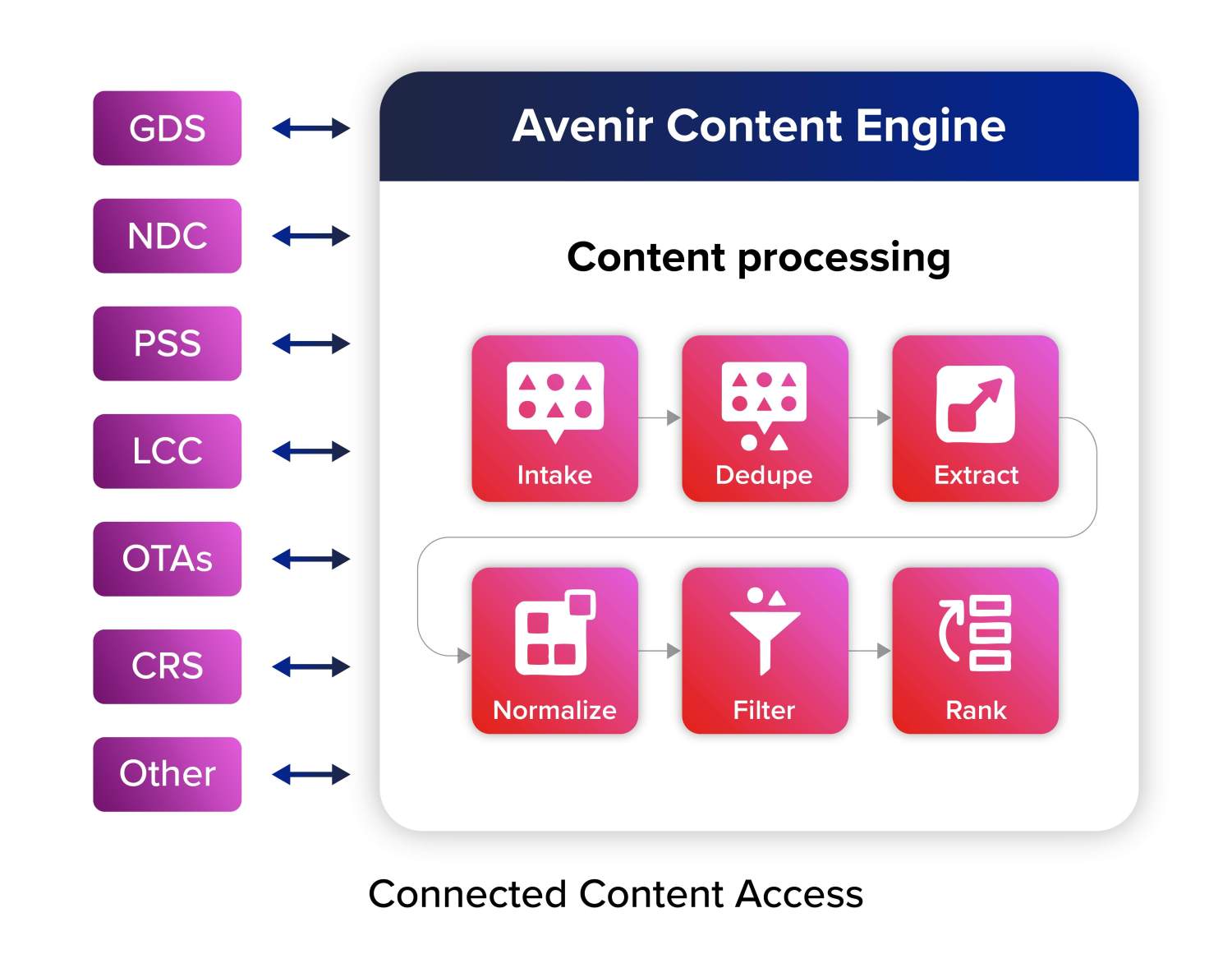
Here are two examples that illustrate how this connected approach works in practice.
Air
Historically for Air Canada, their Flight Pass content often required separate workflows that made it more difficult to manage alongside the rest of a travel program. By bringing Flight Pass into Avenir, users can now access that content within the same booking experience, improving oversight for travel managers while making it easier for travelers to book eligible fares.
Rail
The same approach expands access to rail content. Travelers can book rail across multiple European countries through a single experience in Avenir, rather than being limited to booking within their home market. That gives organizations broader access to rail content while maintaining the same visibility and servicing capabilities as the rest of the travel program.
Content That Works Together
As travel distribution continues to evolve, organizations will need a platform that can adapt to new content sources without adding complexity. Access to content is an important foundation, but a travel program hasn’t truly solved the challenge until the content they have access to can be booked, serviced, and reported on consistently.
Beyond additional booking options, Avenir’s connected approach helps organizations create a travel program where content, servicing, and data work together. This single ecosystem delivers a seamless experience for travelers while providing travel managers with complete visibility into their programs.
To learn more about how Avenir can optimize your own content strategy, get in touch with the Direct Travel team.